Relationships • Finding Love
Why People Fall in Love in War Zones
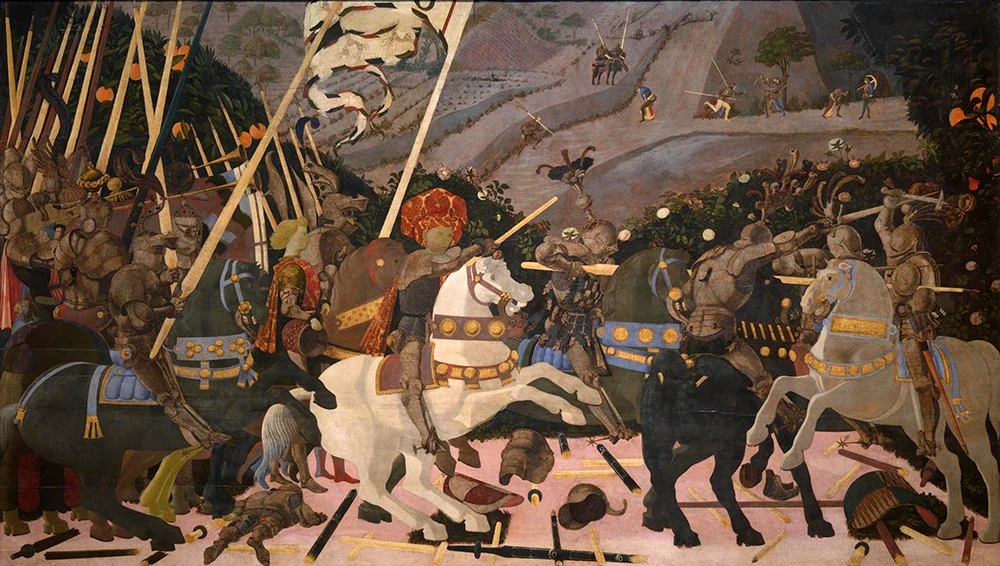
There is an unusual-sounding, commonly observed behaviour to be found in wars. Against a background of destruction and chaos, there is a notable increase in the tempo and intensity of love – a pattern that tells us something essential about love in times of crisis. In an atmosphere of danger, love grows oddly more possible. This lets us know something crucial not just about wars, but about the nature of love: that it is, even during relatively good times, very frightening indeed.
The risks can feel huge. The other will change their mind. We will trust and they will leave. They will tell us something adorable and not quite mean it. We will dismantle our defences and find they don’t do the same. They will judge us for our stories or our physique. We will get used to their warmth and then be returned to solitude.
No wonder if we are tempted to stay very guarded indeed. No wonder if – in some moods, despite our underlying wishes – we go nowhere near love. We say instead that there is no one around, we find fault with every candidate we meet, we throw ourselves into our work, we keep delaying appointments. Anything rather than face (again) the risks of ruptured trust and abandonment.
It isn’t that we don’t want love; we’re just pre-emptively very exhausted by, and terrified of, loss.
When Mortality Clarifies What Matters
But all dangers are relative. Faced with the ultimate disaster, when it seems unclear whether anything will survive even the coming days, as news of the invaders reaches the city, the dangers of love are placed in a new context. Judged against an artillery barrage, the thrum of drones or a night sky illuminated by phosphorous flares, the terrors of love are recalibrated.
If there’s a chance this might be the last weekend, that the city may fall this month, that the water may run out in hours, what were once untenable perils are redrawn. Petrified, we do what we had always wanted to do, had we not been so scared.
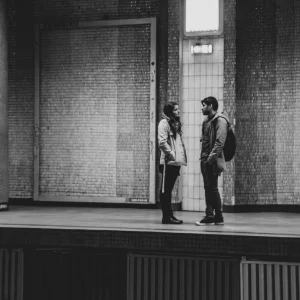
We call them up and tell them we adore them. We make an appointment for the station near the shelter at midday. We stand down our pride and explain without reservation that we have seldom felt this way, that we adore their way of saying certain words and of holding us in their arms.
The Strange Courage Found in Fear
For a time, as the two sides have it out beyond the city gates, we embrace and plan – in appropriate depth – the future we may never have.
Then an armistice is signed, peace returns. Caution finds its way back. We put off calling them. We fail to speak our emotions. We rethink the marriage plans.
The moral: that we should be living – in key ways – as if there were a war. That we might learn something important about how to manage our exposure to danger from the most dangerous of all situations.
The irony is that the ‘peace’ we believe in is an illusion. We are far closer to the constituents of war than we think. The political realm may (for now) be safe enough. But we are never beyond the possibility of sudden annihilation. Our appendix or colon can destroy us as effectively as any guided missile – and as unexpectedly. Death may come tonight.
Understanding Love in Times of Crisis
We are notoriously bad at calibrating hazards. We spend a lifetime carefully attempting not to make mistakes – and make even greater mistakes as a result. We try not to lose and thereby lose everything.
We should, in certain key ways, live as if there were a war. That is, gratefully, avidly, with a greater acceptance of our exposure to decimation, with a knowledge that nothing is assured, with a commitment to make the most of our opportunities if we make it through the night. Let’s – therefore – call them up. Let’s explain what we actually feel; let’s make a fool of ourselves. There are many greater threats once we assess our circumstances properly. In the end, love in times of crisis reminds us of what truly counts. We should, to guide our next moves, raise a strange-sounding question: if there were a war right now, what would we do? And do it anyway.