Relationships • Mature Love
Love Lessons
It can be easy to feel – as we look back on our love lives – that we have been singularly inept in our choices and behaviours. The psychology of relationships can seem painfully clear only in retrospect. Why did we waste so long here? Why did we not see what they were doing there? Why didn’t we speak up sooner? Or hold our nerve?
In such self-recriminatory moods, it can be more than merely sentimental to remind ourselves of a fundamental fact about relationships that we miss when we despair of our conduct: they sit in an area of exceptional importance in which we are granted astonishingly few chances to practise before having to make vastly consequential decisions.
Imagine if we were asked to become great violinists – and were given all of six lessons to perfect our craft. Or if we were expected to master the javelin – after four perfunctory throws. We’d know the odds were stacked against us. We’d have compassion for our often miserable performances. We’d understand what we were up against.
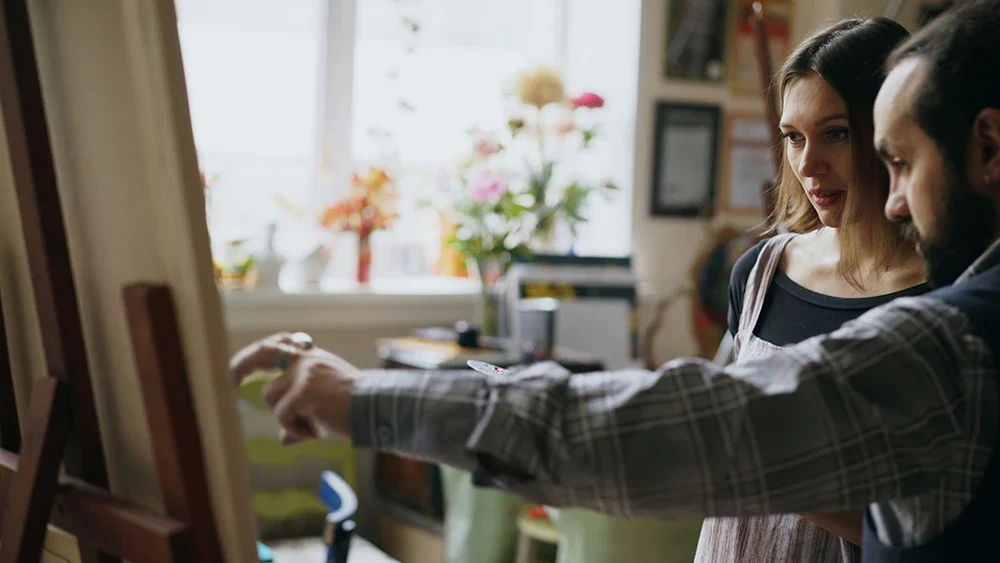
Without us being aware, much the same level of unpreparedness holds true of relationships. Even a highly experienced lover might have only eight partners before getting married; most of us have two or three. Someone might have shared a home with just one other person before deciding to place a new human being on the earth. None of us has ever been asked to pass an examination in love before going on a date.
From the other side of failure, we chastise ourselves for how little we’ve understood. We don’t appreciate how much there is to understand; how infinitely more complicated relationships are than any musical instrument. It’s entirely to be expected that the sounds we make are frequently terrifying.
The Psychology of Relationships
Let us imagine that there are some thirty key lessons to learn about relationships. Thirty things we might have to get the hang of before having any chance at managing our love lives successfully.
We might begin to summarise these lessons as follows:
— always speak up when you’re feeling undervalued
— complain with clarity and kindness, not despair or rage
— never try to persuade anyone to love you
— don’t set out to fix anyone’s childhood
— an absence of attraction is fateful
— but then attraction isn’t enough
— they should be like a best friend
— but this isn’t just a friendship
— resentment at a mother or father has a very long tail
— someone who hates therapy doesn’t just hate therapy; they are liable to hate introspection and dialogue too
— flee from anyone defensive
— never get together with someone because they are ‘right on paper’
— if something breaks down once, the chances of it ever working a second time are beyond minimal
And so on and so forth.
Why Love Requires Practice
The challenge is that though we might state these lessons simply enough, to get the hang of each one requires at least several months and – more usually – years or even decades. We need to experience the finer nuances of the issues through summers and winters, through journeys and work crises, in the slow despair of quiet Sunday afternoons. We need time, encouragement and the right to fail without tragedy. We wouldn’t be any less generous after telling a trumpet player to support their notes from the diaphragm.
In a depressed moment in middle age, we might try to categorise phases of our love lives according to the slow lessons that we’ve taken away from each of them. For example:
— Don’t keep making an effort if they’re not (Caitlin, four and a half years).
— Beware of people who can’t articulate their emotions (Jonathan, six months).
— Don’t wait around hoping they’ll explain why they acted as they did (Roisin, three years).
— Don’t have children before the bond is properly formed (Weiwei, twenty years)
We would need to live to at least 500 years old to stand any realistic chance of picking up our craft. Instead, we are rushed on stage and have to work out the right way to hold the bow before a live audience. Those who haven’t generated disaster and mutiny are luckier than they are talented.
The Education We Never Received
We aren’t miserable because we are stupid but because we weren’t ever trained; because we exist in a culture morbidly and mysteriously resistant to emotional education. We leave things to chance, out of a feeling that it might be cold or un-Romantic to apply some of the basic discipline and foresight that we would resort to before operating a lawn mower or floor polisher. We teach people to become brain surgeons and pilots, yet leave the roles of partner and parent to ‘intuition’.
A better arranged culture would itemise the key lessons of love for people in their last year of school – and then impose a universal intensive training programme with some of the rigour of an architecture or accountancy qualification. We would think of novels and films not as entertainment but as chances to hone the lessons of love we’d learnt in an analytical form elsewhere. We’d use video games to places us digitised scenarios before we had to face them in reality. We’d ask ourselves for patience and be aware, without humiliation, of how blind we necessarily were.
We have made a mess no doubt. We don’t – on top of everything else – need to be surprised that we did so. The psychology of relationships is profoundly difficult to master. This is a game with at least thirty traps in it, and we began to play long before we’d even realised the instructions had been tossed aside.