Leisure • Art/Architecture
The Ugliness of the World
We don’t normally notice it; it’s a background fact that we aren’t in any position to register, let alone feel we can mention. It would be like complaining about gravity, time or clouds.
But then occasionally, at a moment of special vulnerability, the truth can burst through with special force: the modern world, the world of the last hundred years, is ugly – phenomenally, incontrovertibly, monumentally and unremittingly ugly. It’s ugly in Charleroi, Luton, Marbella, Katowice and Eindhoven; it’s ugly in Bakersfield, Fresno, Lima, Manila and Shenzhen. It’s repulsive in parts of Frankfurt, Cumbernauld and Lagos. A world that is so much richer, more democratic, kinder and more civilised has also grown desperately dispiriting to look at. We would need to be half-asleep not to notice it – and we are (we’ve had to be).
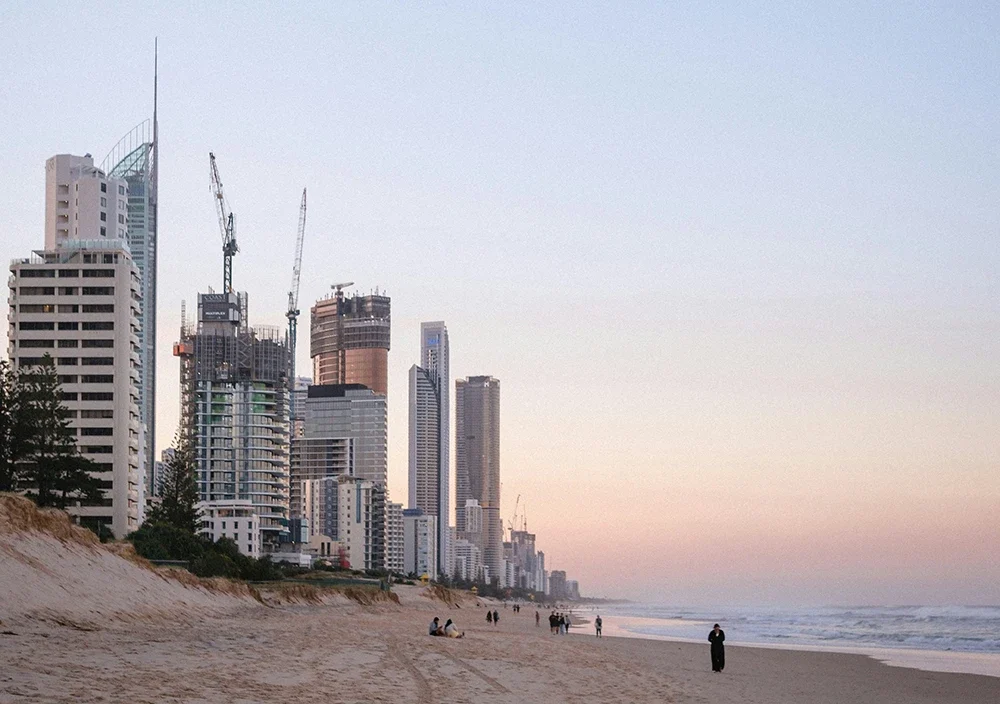
It’s ugly because there are angular, blank-faced, quasi-military concrete apartment blocks spread all the way up to the foothills of the Sierra Nevada; because there are burnt-orange plastic warehouses urinated across the Po valley; because there are tangles of motorway between Taipei and Taoyuan; because the towers of Toronto speak in one voice of shiftiness and despair. There is aesthetic unanimity from São Paulo to Accra, Milton Keynes to Manama – an aesthetic of disregard, mockery and unkindness.
The Protective Layers of Distraction
Usually, we have protective layers between us and the mess: our jobs, our relationships, our sense of haste (we need to be in Malaga by 12.40; there are seven calls we have to make before we reach Doha). We’re on our phones throughout the Uber ride; we’re negotiating for a later appointment at the urology clinic (we’re going to have another colonoscopy); we’re trying to get a point about tenderness across to our avoidant partner; we’re ordering another (longer) cable for the garden.
But we have our weaker moments: when we’re travelling alone, when we’re no longer quite sure what we’re trying to achieve with our careers, when we’ve been left in love and have four nights alone in the Sleepy Inn at the airport in Prague, when we have seven hours to kill in Phoenix or a layover in Algiers. That’s when we can no longer resist the messages that the ugliness has all along been beaming to us. We begin to hear what the warehouses, malls, condominiums, aircraft maintenance hangars, 24-hour gyms and indoor ski slopes have been telling us since around 1924. Messages like: no one gives a damn about you; you’re an incidental bit of soil in a giant fast-moving sewer of sadness and violence; you will die friendless, ugly, incontinent and irrelevant, and all you care about will be concreted over to make way for an eat-as-much-as-you-like buffet restaurant covertly funded by a Neapolitan crime syndicate.
The Unseen Visual Crisis
We know the planet is getting hotter; there are clever people measuring levels of CO₂ and ozone. But we’re still struggling to put into words what’s happening visually – what the turd-shaped glass office building is doing on the horizon, why there are purple and maroon sheds between here and the coast, why a building in the form of a chocolate-sprinkled bagel has gashed its way into the pine forest. Are we the problem? Or is this the last spasm of a peculiar yet legitimately incensed mind faced with an unnoticed planetary crime?
Love as the Only Cure
The solution – it’s always the solution – is what we might as well call love. The kind of love when someone adds tracery to the ironwork on the balcony; when a patient mason locates just the right kind of beige limestone for the lintel; when the proportions remember the shape of our bodies; when someone decides not to make 45% profit so that seven million inhabitants can have a decent horizon; when a developer has been the recipient of enough sweetness early on that they do not clad the 67-storey tower with golden reflective windows. There’s love when someone remembers that we are, in the end, too fragile to take constant greed and discordance; when someone knows that we are as delicate as babies and have a terrifying journey to make through life and therefore need – very, very badly – the kind of repose and cosiness offered by a square with three palm trees by a fountain and a terrace of repeating townhouses by the canal.
To rub salt in, beauty isn’t even very complicated to produce. The principles of attractiveness in all the old parts of town could be summarised on a handkerchief. We’re like a civilisation that invented the most accomplished mobile phones, then threw away the rules, fetishised the old models and started selling one another nonsense in the shape of walkie-talkies glued together with sellotape – while not even noticing the peculiarity of what we were up to.
It’s likely that no one reading this has ever had or will ever have the power to design a new part of town. But at least we can know that we are not alone in suffering from what is going up and will continue to do so until the apocalypse. The best we might do is cry together, hold out a hand to our similarly suffering neighbour and say, ‘I know, I know…’. At least we’ve noticed how much we’re longing (very silently) for modest beauty – and how much ugliness can hurt.