Relationships • Compatibility
Meeting Someone at the Wrong Time
The idea of not being able to understand something because one has met it ‘too early’ in life is familiar enough from our relationship to literature.
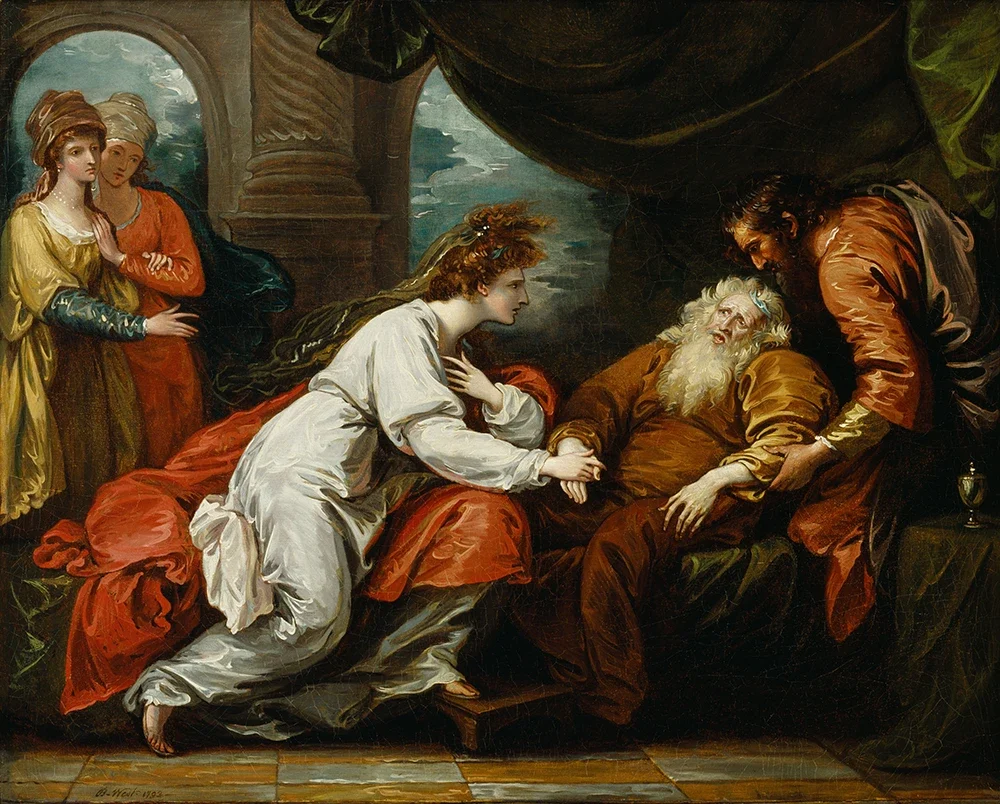
Take a 17-year-old to a performance of King Lear and they will get most of the words clearly enough. It’s the psychological meaning that will elude them – and for a very sound reason: a lack of summers. When the aged King Lear exclaims ‘How sharper than a serpent’s tooth it is / To have a thankless child’, it takes more than a grammatical understanding to determine what is going on. It can require a painful pregnancy, a rush to Queen Charlotte’s hospital at midnight, years of walks to the park, two buggies in a narrow hallway, the yogurt on the underside of the table, 4 a.m. wake-ups, a surly adolescence… twenty-five years in all, apparently entirely unrelated to an understanding of Shakespeare, which nevertheless provide the loam in which Lear’s lines will eventually, one dark October evening at the National Theatre, fall and start to make sense.
Why Experience Is the Hidden Teacher
A virginal A-level class might, similarly, do its utmost to make meaning out of Hamlet’s line: ‘Give me that man / That is not passion’s slave’. But the resonance of the words may have to wait for a very long time, until one has sat outside someone’s house in the car in the rain, begged them to pick up the phone, argued that one should be together when they clearly didn’t wish to be, and found oneself in an alien bedroom wondering what one had done (again). It may not sound like logical preparation for an understanding of an Elizabethan play; it might nevertheless be the indispensable key to doing so.
When Love Speaks Too Soon
So too in our romantic lives, we may find ourselves in agonising situations in which someone cannot grasp our meaning, despite our best attempts to convey it (as careful as those of any English professor), because our interlocutor has simply not passed through the necessary life stages, perhaps unbeknownst to us and to them.
We might, for example, do everything to persuade someone of the value of our love, from a sure knowledge (accumulated over decades) that what we have together is pure and good and immensely rare. They might have great goodwill towards us, they might love us a lot, they might in theory get exactly what we are saying – and yet be powerless to resist the pull of restlessness, surface excitement and masochism. Our entreaties might end up as meaningless as Hamlet’s line ‘O that this too too solid flesh would melt, / Thaw, and resolve itself into a dew’ would to a clever 11-year-old. The cup of understanding may have formed; the liquid of experience has not been poured.
The Limits of Explanation
The book of love has passages every bit as abstruse as Shakespeare’s, albeit less poetic: about how precious affection is, why one has to communicate rather than be defensive, why masochism can’t be an answer, why the bullying of one’s parents shouldn’t determine what one expects of love as an adult, how one must cherish those who have cherished us.
The words may be readable, but they’ll make no sense if delivered too early. And so one may have no option but to part company with one’s adored one, knowing, almost as a certainty, that they will eventually get it, but only after a lot of pain and maybe a divorce or two, in 2056 or 2072 – when we’ll be long gone.
We can argue all we like; we can’t speed up time, which in many cases – more than we want to recognise – is the only thing that unlocks understanding. This is the quiet tragedy at the heart of meeting someone at the wrong time. We may have to say what we need to – and then take our leave, thinking, as an English teacher might (but with a lot more sorrow): everything that could be was said, it was understanding that was missing, and that was only ever a gift of implacable time.