Relationships • Romanticism
Love and the Decline of Religion
We don’t generally connect the way we love with the way we believe. But it’s worth keeping in mind that the historical moment when we first started to place emphasis on love between earthly couples was almost exactly the moment when we ceased to stress the love of humans for their gods. Societies gave up on their fervent attachments to the supernatural at about the same time as they redirected their energies towards venerating their fellow humans. Dating replaced Scripture, and a new age of romanticism and religion took shape – one where devotion was redirected from the divine to the human.
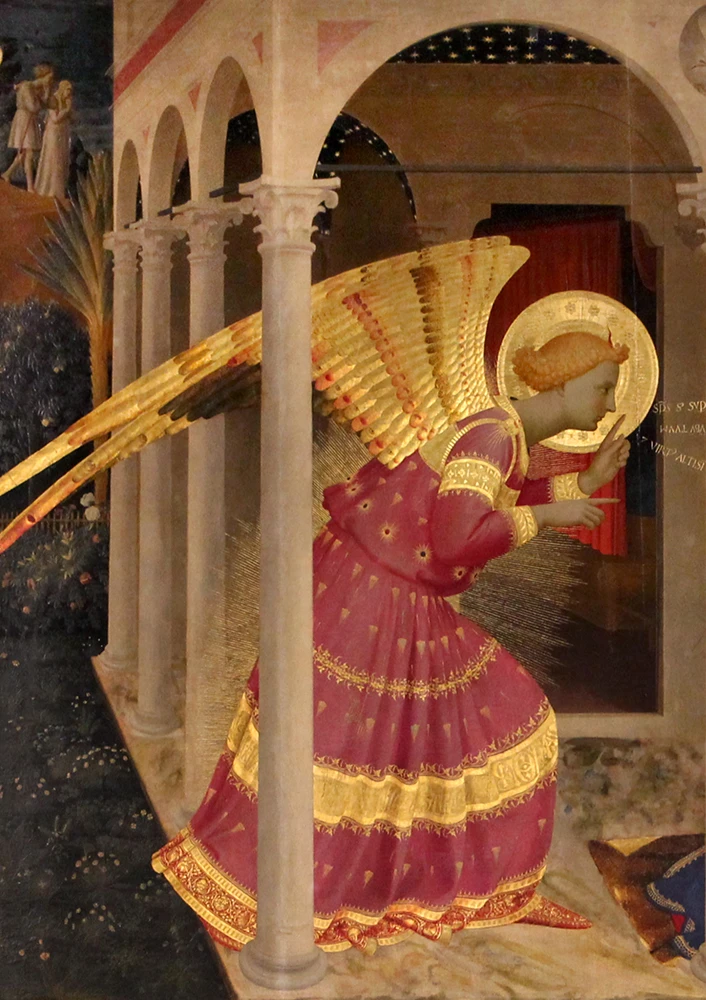
In nineteenth-century Europe, the gradual emptying of churches followed – very closely – the movement of ideas we know as Romanticism, with its fixation on the ecstasies of interpersonal relationships. We started to believe in Earthly Love at around the very time we gave up on the Heavenly variety. Just as we began to scoff at the notion of winged deities, we started referring to one another as ‘angel’ as we called upstairs for help with the groceries or asked where the keys were.
If there has been any risk in this, it has to do with ambition and disappointment. Gods are, by their nature, far better at absorbing hopes than our fellow humans. True angels stay well out of the way. They don’t forget the milk; they aren’t late picking up the children from school. They provide a rarified focus of attention in which the compromises of daily life never intrude. They keep love pure. They have very tender eyes and (often) faraway, beguiling glances. They offer us ecstasy free of the blemishes of routine.
Romanticism and Religion
Religious societies – in their identification of love with the divine – provided their members with a hugely intelligent buffer against disappointment. By telling us that we could not build Jerusalem here on earth, in our own bedrooms and kitchens, they kept our eyes fixed elsewhere: on the heavens, and on an era beyond our own. There were perfect beings, of that we were assured; we were just not about to meet them on the dance floor or in a library. As a result, we brought less intense and urgent expectations to other mortals. Of course another person wouldn’t be able to understand us completely; naturally we’d never be properly happy beside another human; how obvious that most partners would prove blunt, obtuse, often maddening and never quite beautiful enough. None of this was made to feel surprising, humiliating, or grounds for resentment or despair; it was prewritten in the contract of earthly life.
The Wisdom of Accepting Imperfection
In abandoning our churches and temples, we’ve brought a reckless, naive degree of hope to our interactions. It’s an irony that the secular like to accuse the religious of credulity; in love at least, the charge should be entirely reversed. Our songs do not stop celebrating the glories of our newfound loves; our divorce courts testify to reality.
We cannot go backwards. We cannot start to worship gods and angels from a secular place. But by noticing a little more clearly how deep our longings run, and how much we might be directing them upon very mortal and very compromised targets, we might spare our partners some of the intensity of our perfectionist yearnings. We might come to spend more time in thoughtful contemplation of the compromises of earthly life in the aisles of deserted churches, reflecting on romanticism and religion and lighting the occasional candle with tears in our eyes.
To realise that our partners truly aren’t angels may be the start of genuine kindness and tolerance – an act of near-godly wisdom.