Leisure • Travel
The Unwitting Comedy of Resort Hotels
Though not ostensibly places of comedy, there is something a little funny (in a gloomy sort of way) about the world’s resort hotels; the kind with seven swimming pools, carvery buffets, pillow menus, a turndown service and (especially when the establishment is far-flung) a Provencal or Tuscan restaurant overlooking a reef.
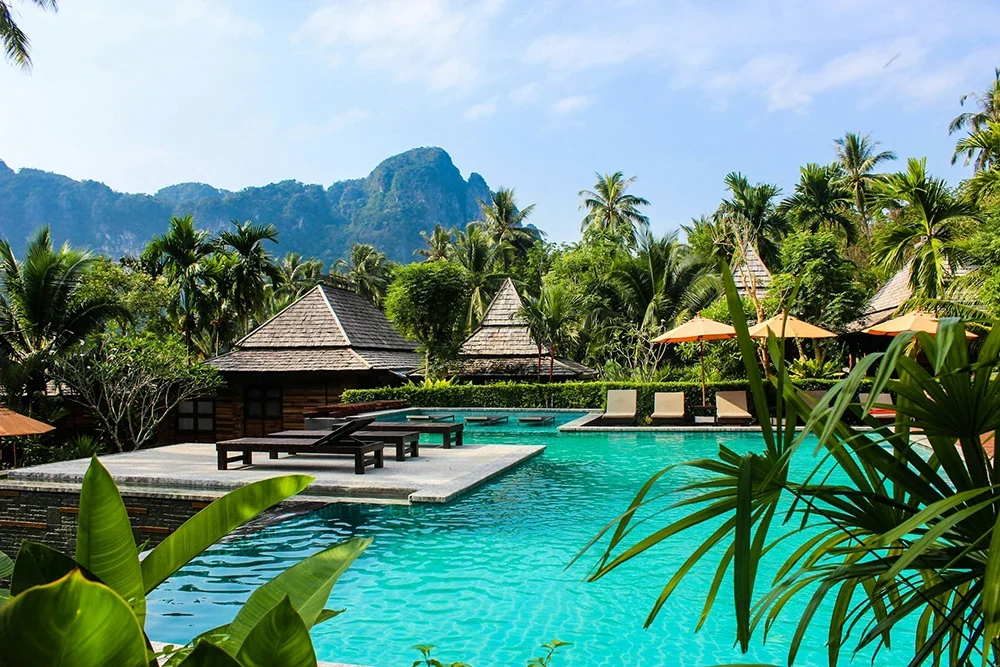
The inadvertent comedy stems from the claim that implicitly runs beneath these hotels: that here you will, after leaving your credit card details, be guaranteed peace of mind. That here, thanks to the unceasing efforts of a highly trained team, all your needs will be taken care of. That here, at last, you will be happy.
And happy for very solid reasons: because there are so many different varieties of baked goods at breakfast, because there are iced towels available at the pool, because gardeners are permanently clipping the bougainvillea, because Mario makes exceptional drinks and because the spa can provide vibrational body mapping and a cacao-surrendering ceremony.
The Illusions of Mental Health and Travel
None of this feels – at first sight – contentious. We’re used to drawing a tight connection between sizeable expenditure and contentment; it’s why MBAs and openings in private equity have good reputations.
Nevertheless, resort hotels provide a concentrated vantage point from which to observe an oversight in our grasp of human psychology. Of course a balcony facing an ocean can – at moments – raise our mood. There are times when the prospect of minigolf can significantly brighten an afternoon. It does take an especially melancholy mind not to see the upsides of a plate of profiteroles.
But to assume that material outlay can, on its own, fundamentally calm and alleviate our psyches has about it some of the naivety of a five-year-old attempting to make Mummy (currently sobbing uncontrollably behind her locked bedroom door) happy by singing ‘Twinkle, Twinkle, Little Star’.
What Resorts Can’t Fix
Despite their commitment to impeccable customer service, resorts are notorious for their confusion in face of most forms of emotional distress.
They struggle when our spouse is no longer speaking to us after an incautious remark about their mother.
They look away from the argument that started at around the time the papaya arrived yesterday morning and has been gripping our couple silently ever since.
They can’t explain why sex now feels implausible, even embarrassing.
They can’t assuage the anger that led us to punch the ice bucket and think of scattering the complimentary bath salts in their underwear drawer.
What do we do with our romantic pains in the early morning, when the room is silent except for a room-service trolley (or coffin) being slowly wheeled down an interminable corridor somewhere above our heads?
Despite the extraordinary efforts of the management, the touching Fernando and the gracious Matilda at the front desk, there are no answers. There is the region’s longest bar and deepest pool and the grandest in-house bakery, and still no salves for the pains of the heart.
We can laugh darkly at our resorts because we are collectively so good at solving our material problems and so recklessly unambitious about addressing our psychological ones; because we chose to travel to the moon long before we understood how to have happy marriages; because there are three buttons to press when we need a hand-towel origami and none at all when we are frightened, ashamed and alone. In the wider conversation about mental health and travel, we are still waiting for the truly ‘luxurious’ hotels of the future – that is, hotels devoted to carefully understanding and responding to the difficulties of being alive.